
Exploring Dietary Principles and Nutritional Science
An independent, non-commercial resource presenting balanced information on nutrition, dietary patterns, and the science of food.
Explore InsightsA Commitment to Evidence-Based Understanding
Xyrmus was established as an independent educational platform dedicated to presenting nutritional science in an accessible, unbiased manner. We believe that informed understanding of dietary principles empowers individuals to make thoughtful choices in their everyday lives.
Our content draws on established research and widely accepted frameworks within nutritional science. We do not advocate for specific diets, endorse any commercial products, or provide personal health guidance. Every article and resource on this site is crafted to explain, contextualise, and inform — never to prescribe.
The principle guiding every piece of content published here is straightforward: explain, do not advise. We describe phenomena, present evidence, and offer context. What you choose to do with that knowledge is entirely your own decision.
Educational content only. No promises of outcomes. All information on this site is for educational purposes and does not constitute advice of any kind.
Foundational Principles of Dietary Balance
Nutritional science recognises a number of core principles that form the foundation of a varied and balanced dietary approach. These are not rules, but frameworks for understanding how food relates to the body.
-
1
Variety
Consuming a wide range of foods helps ensure exposure to diverse nutrients, reducing the likelihood of deficiencies.
-
2
Balance
A balanced dietary pattern includes appropriate proportions of macronutrients — carbohydrates, proteins, and fats — alongside essential micronutrients.
-
3
Moderation
No single food group is inherently harmful or beneficial in isolation. Context, quantity, and overall dietary patterns matter.
-
4
Adequacy
Meeting the body's requirements for energy and essential nutrients supports normal physiological function.
-
5
Seasonality
Seasonal produce often presents higher nutrient retention due to reduced time between harvest and consumption.

How the Body Processes Food
Digestion and Nutrient Absorption
Digestion is the process by which the body breaks down food into components small enough to be absorbed into the bloodstream. This begins in the mouth with mechanical breakdown and enzymatic action, continues through the stomach, and is largely completed in the small intestine.
Different macronutrients follow distinct digestive pathways. Carbohydrates are broken into simple sugars, proteins into amino acids, and dietary fats into fatty acids and glycerol. The efficiency of this process depends on many factors, including the food's physical structure, fibre content, and the composition of the overall meal.
The Role of the Gut
The gastrointestinal tract is not merely a passive conduit. It hosts a diverse community of micro-organisms — collectively referred to as the gut microbiota — which participate in fermenting undigested dietary fibres, producing certain vitamins, and interacting with the body's physiological systems.
Nutrient Transport
Once absorbed through the intestinal wall, nutrients enter the portal circulation and are transported to the liver, which acts as a central metabolic hub. Water-soluble vitamins and minerals pass directly into the bloodstream, while fat-soluble nutrients are packaged into carrier molecules for transport.
Understanding these pathways contextualises why dietary diversity matters: different foods contribute to absorption of different compounds, and some nutrients are more bioavailable in certain food matrices than in others.
This information is for educational purposes only and is not intended to be a substitute for professional medical advice, diagnosis, or treatment. Always seek the advice of your physician or other qualified health provider with any questions you may have regarding a medical condition.
The Three Primary Macronutrients
Macronutrients are the energy-providing components of food. Each plays a distinct and necessary role in supporting the body's structure and function.
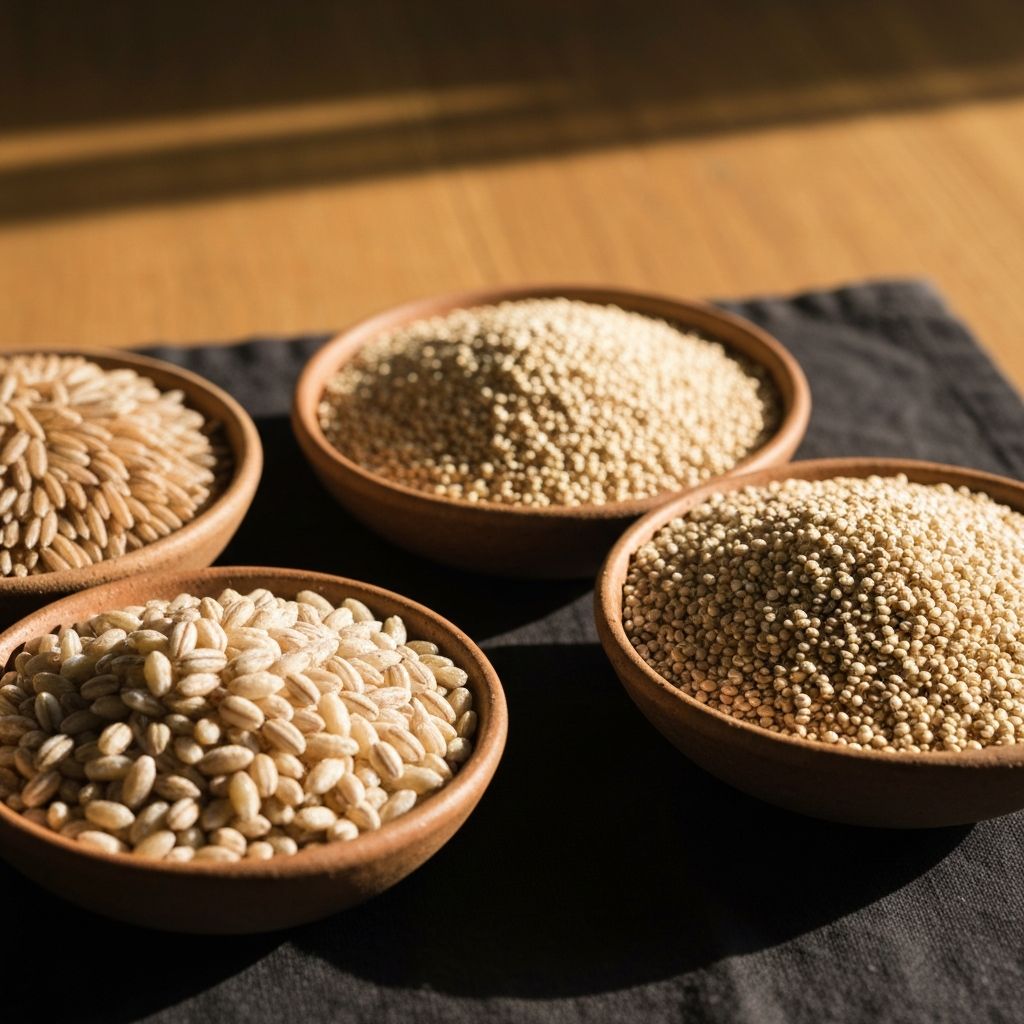
Carbohydrates
The body's primary energy source. Complex carbohydrates from whole grains, legumes, and vegetables provide sustained energy release and dietary fibre, which supports digestive function. Simple sugars, found naturally in fruits and dairy, are absorbed more rapidly.

Proteins
Composed of amino acids, proteins are the structural components of cells, enzymes, hormones, and immune molecules. Dietary protein sources include animal-derived foods such as meat, fish, eggs, and dairy, as well as plant-based sources such as legumes, soya, and quinoa.

Dietary Fats
Essential for cell membrane integrity, hormone synthesis, and the absorption of fat-soluble vitamins (A, D, E, and K). Dietary fats are classified by their chemical structure as saturated, monounsaturated, and polyunsaturated, each with distinct properties in the body.
Vitamins and Minerals at a Glance
While required in smaller quantities than macronutrients, vitamins and minerals are indispensable for a wide range of physiological processes.
| Micronutrient | Category | Primary Dietary Sources | Key Physiological Role |
|---|---|---|---|
| Vitamin C | Water-soluble vitamin | Citrus fruits, bell peppers, broccoli, kiwi | Collagen synthesis, antioxidant activity, iron absorption support |
| Vitamin D | Fat-soluble vitamin | Oily fish, egg yolks, fortified foods, sunlight exposure | Calcium absorption regulation, bone structure maintenance |
| Vitamin B12 | Water-soluble vitamin | Meat, fish, dairy, fortified plant-based foods | Nervous system function, red blood cell formation |
| Iron | Mineral | Red meat, legumes, fortified cereals, dark leafy greens | Oxygen transport via haemoglobin |
| Calcium | Mineral | Dairy products, fortified plant milks, tofu, leafy greens | Bone and tooth structure, muscular contraction, nerve signalling |
| Magnesium | Mineral | Nuts, seeds, whole grains, dark chocolate, legumes | Enzyme function, energy metabolism, muscle and nerve function |
| Zinc | Trace mineral | Meat, shellfish, legumes, seeds, nuts | Immune function, wound repair, protein synthesis |
| Folate (B9) | Water-soluble vitamin | Dark leafy greens, legumes, fortified grains | DNA synthesis, cell division |

More Than Just Water
Water is the most abundant compound in the human body, constituting approximately 60% of total body mass in adults. It serves as the solvent in which virtually all metabolic reactions occur, as a transport medium for nutrients, and as a thermoregulatory mechanism.
Adequate fluid intake is considered fundamental to supporting normal physiological function. Requirements vary based on body composition, ambient temperature, physical activity levels, and the water content of the foods consumed.
Beyond plain water, fluids are contributed by numerous foods — particularly fruits and vegetables — and beverages such as herbal infusions and diluted fruit juices. Understanding total fluid intake, rather than focusing solely on glasses of water consumed, provides a more complete picture of hydration status.
Common Misconceptions in Nutritional Understanding
Nutritional science is frequently misrepresented in popular media. The following addresses some widely held misconceptions with a factual perspective.
"Carbohydrates cause weight gain"
Carbohydrates are the body's primary fuel source. Energy balance — the relationship between energy consumed and energy expended — is a far more complex phenomenon than attributing it to any single macronutrient. Whole food sources of carbohydrates, including fruits, vegetables, and legumes, are associated with dietary fibre and a range of micronutrients.
"Eating fat makes you fat"
Dietary fat is a macronutrient essential for numerous biological processes, including vitamin absorption, hormone production, and cell membrane structure. The relationship between fat intake and body composition is nuanced and dependent on overall dietary context, type of fat, and total energy intake.
"Detox diets cleanse the body"
The liver and kidneys are the body's primary organs for processing and eliminating metabolic waste products. There is no established scientific evidence that specific short-term dietary regimes meaningfully augment these physiological processes beyond their normal function.
"Fresh produce is always more nutritious than frozen"
Freezing vegetables and fruits shortly after harvest can preserve a significant proportion of their nutrient content. Fresh produce that has been transported over long distances and stored for extended periods may, in some cases, have undergone greater nutrient degradation than its frozen counterpart.
Interconnected Factors in Dietary Well-Being
A comprehensive understanding of nutrition extends beyond individual nutrients. The following principles work in combination to form a coherent framework for dietary awareness.
Variety
Diverse food choices provide a broader spectrum of nutrients and support gut microbiota diversity.
Balance
Proportional intake of macronutrients and micronutrients contributes to overall physiological equilibrium.
Moderation
Avoiding excessive intake of any single food category is a consistent finding across dietary research traditions.
Seasonality
Seasonal produce aligns with natural harvest cycles, often presenting higher freshness and nutrient retention.

Common Questions About Nutritional Science
Xyrmus is an independent educational resource. Its purpose is to present evidence-based information about dietary principles and nutritional science in a clear, accessible format. It does not provide personal health advice, sell products, or advocate for specific diets.
The content on this site is strictly educational. It is designed to inform and contextualise, not to provide individual guidance. For personal dietary decisions, particularly those related to any health concern, consulting a qualified nutritionist or healthcare professional is strongly recommended.
Macronutrients — carbohydrates, proteins, and fats — are required in relatively large quantities and provide the body with energy. Micronutrients — vitamins and minerals — are required in smaller amounts but are equally essential for physiological function, supporting processes ranging from bone maintenance to enzyme activity.
Nutritional science is the study of how nutrients and food components interact with the body at a physiological and biochemical level. Nutrition advice, by contrast, involves applying this knowledge to individual circumstances, which requires professional assessment of personal factors including health status, lifestyle, and individual requirements.
Xyrmus aims to present information that reflects established consensus within nutritional science. Content is reviewed periodically to ensure accuracy and alignment with current scientific understanding. Where emerging research may challenge established frameworks, this is noted contextually.
Explore Our Research Insights
Our Insights section presents in-depth explorations of specific nutritional topics, from whole grains to gut microbiota, all grounded in educational context.
Explore Further